Tracked 47 Online Orders in 6 Weeks: The App That Finally Brought Calm to My Mornings
Ever feel like your day starts with chaos—kids yelling, coffee spilling, and you frantically checking your phone to see if that essential package has arrived? I did too. For weeks, I wasted precious morning hours refreshing browsers, calling couriers, and losing patience. Then I found one simple app that quietly transformed my routine. It didn’t just track packages—it gave me back time, focus, and peace. This is how a tiny tech tool reshaped my entire life rhythm. And if you’ve ever stood at the door empty-handed, wondering where your yoga pants or your child’s birthday gift vanished to, this story is for you.
The Morning Chaos No One Talks About
Picture this: it’s 7:15 a.m. The toast is burning. One kid can’t find her school shoes. The other is crying because his favorite shirt is still in the laundry. You’re stirring oatmeal with one hand, holding your phone with the other, eyes glued to a tracking page that hasn’t updated in 36 hours. Is it out for delivery? Was it delivered? Did the carrier leave it at the wrong house again? You refresh. Nothing. You tap another browser tab—another order, another carrier, another mystery. Your shoulders are tight. Your breath is shallow. And it’s not even 7:30.
This wasn’t just a bad morning. This was my life for nearly two months. I had become the family’s unofficial logistics manager—ordering groceries, school supplies, birthday gifts, seasonal clothes, even pet food—and with every click, I added another invisible task to my mental to-do list: track the delivery. But no one warned me how exhausting it would be. Every unconfirmed delivery was a tiny knot in my chest. Every silent doorstep was a question I couldn’t answer. And every time I missed a drop-off because I was at the dentist or the grocery store, I felt like I’d failed—not just as a shopper, but as a mom.
Then came the breaking point. I ordered a special reading lamp for my daughter’s school project. Delivery window: 8 a.m. to 2 p.m. I marked it on the calendar. I set phone reminders. I even told her, “It’ll be here tomorrow, sweetie.” But the next morning, I rushed her to school, thinking I’d check for the package when I got back. Only when I returned did I see the carrier’s note: “Left at back door.” Except—there was nothing there. After an hour on the phone with customer service, I learned it had been marked delivered at 8:07 a.m. But no photo. No notification. No way to prove it arrived. I had to reorder. And I had to tell my daughter her project might not be ready in time.
That night, I sat at the kitchen table, staring at my phone, tears mixing with frustration. It hit me: I was spending more emotional energy managing deliveries than enjoying the things I’d ordered. I didn’t just need a new lamp. I needed a new system.
Why Order Tracking Feels Like a Full-Time Job
Let’s be honest—no one shops online because they love logistics. We shop online because it saves time. But somewhere along the way, that time-saving promise started to unravel. Because while ordering is easy, staying on top of what comes after is anything but. Think about it: you buy leggings from one site, vitamins from another, a birthday gift from a third, and groceries from a fourth. Each comes with its own tracking number, its own carrier, its own app or website to check. One uses FedEx, another UPS, another a regional courier you’ve never heard of. Some send email updates. Some text. Some do nothing until you log in and search manually.
It’s like trying to follow five different TV shows at once—each with its own schedule, language, and notification system. And your brain? It’s the overstretched remote control, constantly switching channels, trying to keep up. I started to notice how much mental space this took. While folding laundry, I’d wonder, “Did the stroller cover ship yet?” While helping with homework, I’d think, “Wasn’t the coffee machine supposed to arrive today?” These weren’t major crises—just tiny, nagging questions that chipped away at my focus, my calm, my presence.
And science backs this up. Studies show that even low-level, ongoing stress—what psychologists call “background anxiety”—can wear down our emotional reserves over time. It’s not one big thing. It’s a hundred small things, each whispering, “Don’t forget this. Check that. Follow up.” And when you’re a mom, a partner, a worker, a planner, a cook, a cleaner, a cheerleader—those whispers add up. I realized I wasn’t just tired from lack of sleep. I was tired from mental clutter. And the sad truth? No one talks about this part of modern life. We celebrate the convenience of online shopping, but we rarely admit the hidden cost: our peace of mind.
What I needed wasn’t another reminder. I needed a way to stop remembering altogether.
How One App Became My Daily Anchor
I didn’t go looking for a miracle. I just wanted fewer tabs open. So when a friend mentioned she’d started using an app to track all her orders in one place, I figured, why not? I downloaded it that night—no big expectations. No fanfare. Just curiosity. And within 48 hours, something shifted.
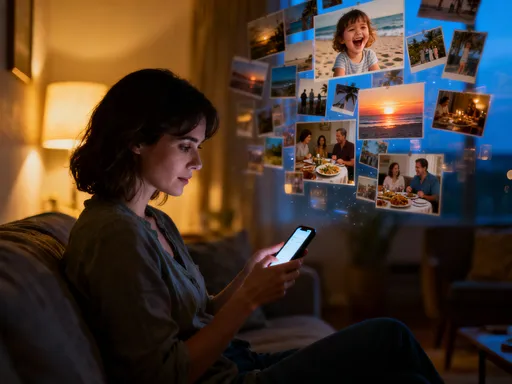
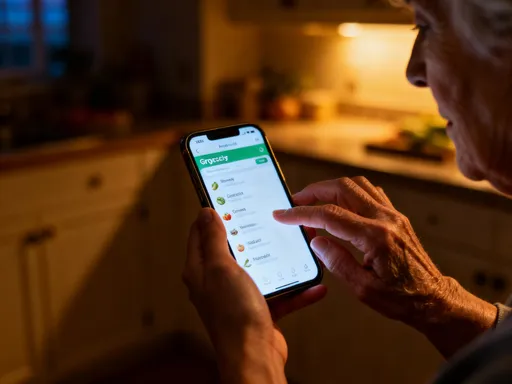
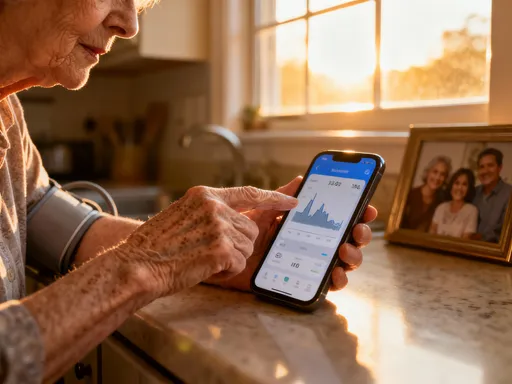
It started with a notification: “Your order from GreenEarth Organics has shipped. Expected delivery: Thursday, 10:30 a.m.–1:15 p.m.” Simple. Clear. No guessing. No hunting. And—this was new—it told me before I had to ask. I didn’t have to log in. I didn’t have to search. The app had pulled in every order I’d made in the past six weeks—47 of them—across eight different stores, five carriers. Everything was there. Color-coded. Labeled. Organized by delivery date. I remember sitting on the couch, scrolling through it, and realizing: I hadn’t felt this in weeks. Lightness. Like someone had lifted a backpack full of rocks off my shoulders.
The real magic wasn’t in the data—it was in the feeling. For the first time, I wasn’t waiting for surprises. I wasn’t bracing for disruptions. I knew what was coming, when, and how. That Thursday morning, when the GreenEarth delivery arrived at 11:02 a.m., I was already expecting it. I heard the chime on my phone, saw the “Delivered” tag with a photo of the box on my porch, and went to grab it—calmly, without panic. No frantic calls. No missed drops. Just… ease.
That’s when I realized this app wasn’t just a tool. It was a daily anchor. In a world that feels increasingly unpredictable, it gave me one thing I deeply needed: control. Not control over everything—just over this one, manageable piece of my day. And from there, everything else started to feel a little more possible.
Syncing Deliveries with Real Life Rhythms
Here’s what surprised me most: the app didn’t just tell me when packages were coming. It started to understand my life. After a few weeks, it learned that I’m usually home between 9:30 and 11:30 a.m. on weekdays. So instead of sending alerts at 6 a.m. or 8 p.m., it began grouping updates and delivering them in the morning, when I could actually do something about them. No more midnight buzzes. No more 6:45 a.m. pings about a package that wouldn’t arrive until 3 p.m.
And then came the customization. I discovered I could set “quiet hours”—from 7 p.m. to 7 a.m.—so the app wouldn’t interrupt bedtime stories or family dinners. I could label packages by urgency: “Urgent,” “Nice to Have,” “Gift,” “Replacement.” I could even sync delivery windows with my calendar. When I saw that a new vacuum was arriving on the same day as my sister’s visit, I rescheduled the delivery for the next morning—no problem. It felt like the technology was finally working for me, not against me.
One of my favorite features? Location-based alerts. If I’m out running errands and a package is delivered, my phone buzzes with a gentle notification: “Your order has arrived while you were out. Photo attached.” No more calling the carrier to confirm. No more worrying about porch pirates. Just peace of mind, delivered with the package.
I started planning around deliveries instead of reacting to them. Laundry day? I’d schedule detergent and fabric softener to arrive the day before. Meal prep weekend? I’d time my grocery delivery to arrive Saturday morning. It sounds small, but these little alignments made my week feel smoother, more intentional. I wasn’t just tracking packages. I was designing my week—with fewer surprises and more flow.
The Ripple Effect on Family and Focus
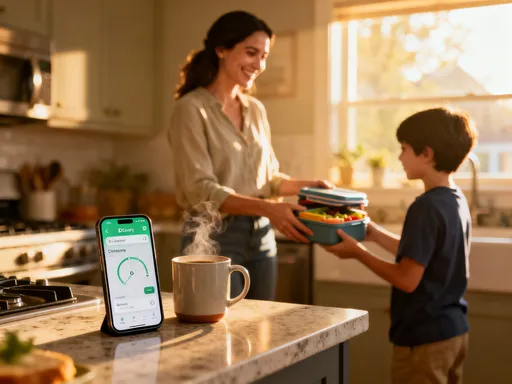
You’d think the biggest win would be getting my packages on time. But the real change was deeper. With that constant hum of delivery anxiety gone, I noticed shifts in places I didn’t expect. Mornings became calmer. I wasn’t rushing to check my phone before helping with homework. I wasn’t snapping at the kids because I was stressed about a missing order. I was more present. More patient. More me.
My partner noticed. “You seem lighter,” he said one evening. “Like you’re not carrying that invisible weight anymore.” And he was right. I had more mental space—not just for logistics, but for life. I started reading during the 20 minutes I used to spend refreshing tracking pages. I began journaling again. I even took a watercolor class online, something I’d been putting off for years because I “didn’t have time.” But it wasn’t about time. It was about energy. And once I stopped wasting energy on low-grade stress, I had more to give—to my family, to my hobbies, to myself.
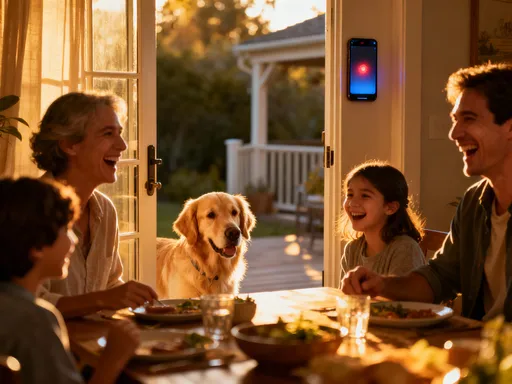
My kids noticed too. “Mom, you’re not on your phone as much in the morning,” my daughter said one day. And it was true. I wasn’t buried in tabs. I wasn’t muttering about where the package was. I was making pancakes, listening to her stories, laughing at her jokes. That small tech fix had created space for real connection. And that, more than any delivered box, felt like a gift.
Even my work improved. As a freelance graphic designer, focus is everything. But for months, I’d been distracted—pausing mid-project to check delivery statuses. Now, with everything automated, I could stay in the zone longer. Deadlines felt less stressful. Creativity flowed easier. It turns out, when your brain isn’t juggling a dozen hidden tasks, it can actually do its best work.
Making It Work for Your Unique Routine
If you’re thinking, “This sounds great, but my life is way more complicated,” I hear you. I thought the same. But the beauty of this app is that it’s not about fitting your life into a system. It’s about building a system around your life. And it’s easier than you think.
Start by importing your old orders. Most apps like this can pull in emails from your inbox—just give it permission to scan your shopping confirmations. Within minutes, it’ll find every order from the past few months and add them to your dashboard. No manual entry. No spreadsheets. It’s like magic, but real.
Next, set up custom alerts. Decide when you want to hear about deliveries. Maybe it’s only during the day. Maybe you want a heads-up an hour before a package arrives. Maybe you want weekly summaries instead of real-time pings. The choice is yours. I set mine to send a morning digest at 8:30 a.m.—just enough info to plan my day, without overwhelming me.
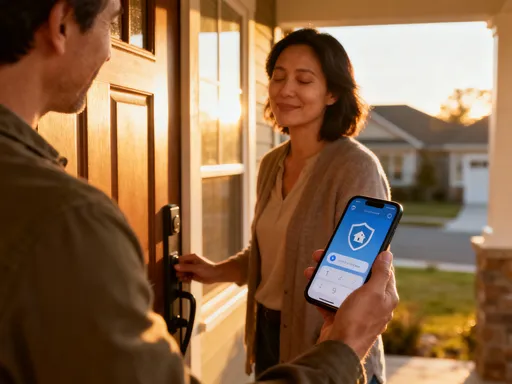
Then, consider sharing access. I linked my account with my mom, who sometimes picks up packages when I’m out. She gets a simplified view—just delivery times and photos—so she can grab the box if needed. No passwords shared. No security risks. Just trust, made easier by tech.
And don’t forget calendar sync. When you’re juggling school events, doctor appointments, and family visits, knowing delivery windows in advance helps you avoid conflicts. I once had a rug scheduled to arrive the same day as a plumber visit. A quick reschedule through the app saved me from a scheduling nightmare. Small fix. Big relief.
The key? Don’t aim for perfection. Aim for progress. Start with three orders. See how it feels. Adjust as you go. This isn’t about becoming a tech expert. It’s about becoming a little more at ease.
Beyond Packages: Reclaiming Mental Space
Looking back, I realize the app didn’t just solve a logistics problem. It solved a mindset problem. I had been living in constant reactivity—responding to alerts, chasing updates, fixing mistakes. I was so busy managing the details that I forgot I could design my days differently. This tool reminded me that I have a choice: I can let technology add to my stress, or I can use it to create more calm.
And that’s the secret most of us miss. The best technology isn’t the flashiest. It’s not the one with the most features or the loudest ads. The best tech is the kind that disappears. It works quietly in the background. It handles the small stuff so you can focus on the big stuff—like hugging your kids, finishing a project, or just sipping your coffee while it’s still hot.
Since I started using this app, I’ve tracked 47 orders. Not one has slipped through the cracks. But more importantly, I’ve reclaimed mornings. I’ve regained focus. I’ve found space to breathe, to think, to be. And that, to me, is the real win.
So if you’re tired of feeling like your phone is your boss, if you’re tired of the constant check, check, check—give this a try. Not because you need another app, but because you deserve more peace. Because you’re not just a shopper. You’re a mom, a creator, a planner, a caregiver. And you don’t need more stress. You need tools that honor your time, your energy, your life. The right tech won’t change everything. But it might just change enough to make everything else feel a little easier. And sometimes, that’s all we need to feel like ourselves again.