Tired of Losing Precious Travel Moments? Here’s How to Keep Every Memory Close
Have you ever returned from an amazing trip only to realize your photos are scattered, your notes lost, and the little details—like that cozy café in the alley or the name of the mountain at sunset—already fading? You’re not alone. In a world where we capture hundreds of moments, most of us still struggle to keep them meaningful. But what if organizing your travels could feel effortless, even joyful? This guide will show you how simple tools can turn fleeting experiences into lasting, personal stories—no tech skills needed.
The Problem: Why We Lose the Magic of Our Trips
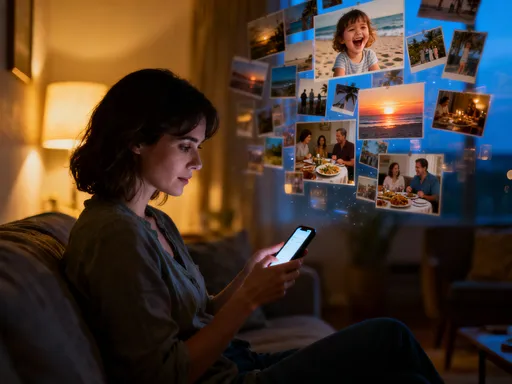
Picture this: you’re back from a two-week adventure in the mountains—your suitcase is open, your feet are tired, and your phone is full of hundreds of photos. You sit down with a cup of tea, ready to relive the journey, only to find that the magic isn’t quite there. The photos are out of order. Some are blurry. Others don’t show what you actually felt in that moment. The name of the village where you had the best bread of your life? Gone. The story behind the handmade scarf you bought? Fading fast. And the quiet joy of that sunrise over the valley? Lost somewhere between work emails and grocery lists.
This isn’t your fault. It’s not because you didn’t pay attention or take enough pictures. The truth is, our memories were never meant to be stored in folders labeled ‘Italy 2023’ or on memory cards buried in a drawer. We’re emotional beings who remember feelings more than facts. We recall the warmth of a stranger’s smile, the smell of rain on stone paths, the way the light looked when you realized you were exactly where you were meant to be. But our current systems—photos here, notes there, voice memos somewhere else—don’t support that kind of memory. They’re built for storage, not for storytelling.
And let’s be honest: most of us don’t have the time or energy to sort through hundreds of images, write captions, or create albums after every trip. Life moves fast. The moment we get home, the momentum fades. The details slip away. What’s left is a digital graveyard of unsorted snapshots—beautiful, but disconnected from the heart of the experience. The real tragedy isn’t losing a photo. It’s losing the feeling behind it. The real loss is forgetting who you were in that moment—curious, brave, joyful, free.
A New Way: Meet the Travel Memory Assistant
What if technology could help you remember not just what you saw, but how you felt? Not by asking you to do more, but by doing more for you? That’s the idea behind the modern travel memory assistant—a quiet, intelligent companion that works in the background, gathering the pieces of your journey so you don’t have to. Think of it as a personal storyteller that shows up with you, listens, watches, and remembers.
This isn’t about complicated software or learning new skills. It’s about using tools that already exist on your phone in a more intentional way. Imagine an app that automatically logs where you were, what time you arrived, and what the weather was like—without you lifting a finger. One that saves your photos in the order you took them, groups them by place, and even links your voice notes to the exact spot where you recorded them. You don’t have to tag anything. You don’t have to organize. You just live. And later, when you’re ready, it hands you back your trip—not as a list of files, but as a living story.
The beauty of this approach is that it doesn’t ask you to change who you are. You don’t need to become a photographer, a writer, or a digital archivist. You just need to be present. The technology becomes invisible, like a trusted friend who quietly takes notes while you enjoy the conversation. It’s not about productivity. It’s about presence. It’s not about capturing every second. It’s about preserving what matters.
And the best part? These tools are already in your pocket. You don’t need to buy anything new. Most smartphones come with built-in features that can do this work—photos that auto-sync, notes that save across devices, maps that remember your routes. The shift isn’t technological. It’s mental. It’s deciding that your memories are worth keeping—and that you deserve a way to keep them that feels gentle, not overwhelming.
How It Works: Your Day-to-Day Memory Partner
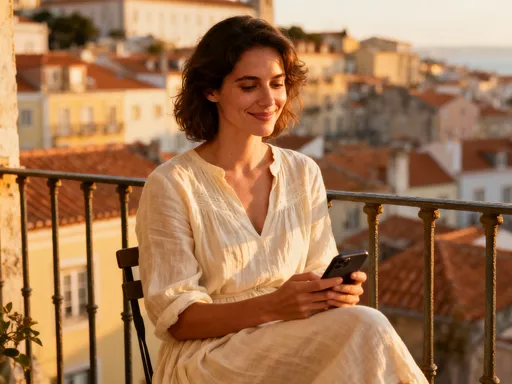
Let’s walk through a real day—your third morning in Lisbon—to see how this works in practice. You wake up to soft light filtering through the curtains. You step onto the balcony with your coffee, and the city is just beginning to stir. Without thinking, you snap a photo of the terracotta rooftops, the church bell ringing in the distance. That photo is automatically saved, tagged with the time, date, and location. You don’t have to do anything.
Later, you wander down a narrow street and stumble upon a tiny bakery. The smell of warm pastries pulls you in. You try a custard tart, and it’s so good you laugh out loud. You open your notes app and tap the microphone: “Best tart ever. Crispy, creamy, perfect. The woman behind the counter called me ‘querida’—felt like home.” That voice note is saved with the same location data as your photo. Later, when you look back, both will appear together, tied to that little shop on Rua da Prata.
In the afternoon, you take a spontaneous hike up to Miradouro de Santa Luzia. The view takes your breath away—red rooftops cascading down to the river, boats drifting slowly on golden water. You take a few photos, but more importantly, you pause. You record another voice note: “I feel so small in the best way. Like my problems don’t matter here. Just beauty, quiet, light.” You don’t think about it again. You keep walking.
That evening, back at your rental, you glance at your phone. Without any effort on your part, your photos, notes, and location data have been woven together into a single, coherent thread. You didn’t have to label anything. You didn’t have to sort. But now, months later, you’ll be able to return to this day and not just see it—you’ll feel it. The tart, the view, the quiet joy. The technology didn’t replace the experience. It protected it.
Building a Story, Not Just a Timeline
Most of us think of travel memories as a timeline: Day 1, Day 2, Day 3. But life doesn’t happen in neat chapters. It happens in moments—some big, some small, all connected by feeling. The power of a good memory tool isn’t in organizing dates. It’s in helping you rediscover emotion.
Imagine opening your travel journal six months from now. Instead of clicking through hundreds of photos, you tap on a map. A red pin appears in Lisbon. You tap it. A photo of the bakery loads. Then, your voice plays: “Best tart ever.” You smile. Another pin—Santa Luzia. The view. Your voice: “I feel so small in the best way.” Your eyes well up. This isn’t just a record. It’s a re-experience. It’s memory with depth.
These tools help you build stories, not just archives. They let you see patterns—how often you felt wonder, when you felt lonely, what kinds of places made you feel alive. You might notice that every time you wandered without a plan, you found something beautiful. Or that the moments you felt most connected were when you spoke to locals, even with broken language. These insights don’t come from data. They come from reflection. And reflection only happens when the memories are easy to return to.
And here’s something important: this isn’t for Instagram. This isn’t about crafting a perfect image for others. This is your private space. Your digital memory box. A gift to your future self. You don’t have to share it with anyone. You can keep it raw, messy, real. You can save the photo of your tired feet at the end of a long day. You can keep the voice note where you cried because you didn’t want to leave. This is about truth, not performance.
Getting Started Without Overwhelm
I know what you might be thinking: “This sounds nice, but I’m not tech-savvy. I barely know how to back up my photos.” First, take a deep breath. You don’t need to master everything at once. You don’t even need a new app. Start small. Start with what you already have.
Pick one tool you already use—maybe your iPhone Notes, or Google Photos, or even your calendar. Before your next trip, decide on one simple habit. For example: every evening, take one photo of something that moved you that day. It doesn’t have to be beautiful. It could be a wrinkled hand handing you a ticket, a dog sleeping in the sun, a plate of food. Then, write one sentence about how it made you feel. “This man reminded me of my father.” “I felt safe here.” “I was so proud I did this alone.”
That’s it. No pressure. No perfect captions. No sorting later. Just one photo, one thought, every night. Over time, these tiny moments build into something powerful. You’ll start to see your own growth. You’ll remember not just where you went, but who you were becoming.
If you want to go a little further, try using voice notes. They feel more personal than typing. You can record while walking, while eating, while sitting on a bench. Say what you see, what you feel, what you wonder. “I’m in a garden. The air smells like jasmine. I keep thinking about what Mom would say if she saw this.” These words will mean more to you years from now than any caption ever could.
The key is kindness. Don’t aim for perfection. Aim for presence. Some days you’ll forget. Some days you’ll be too tired. That’s okay. The goal isn’t to capture everything. It’s to keep a few precious threads of feeling alive. And the more you practice, the more natural it becomes.
Sharing the Journey—On Your Terms
Now, you might wonder: should you share these memories? The answer is—only if and how you want to. This isn’t about posting online or impressing anyone. It’s about connection, on your terms.
Maybe you create a simple slideshow for your parents, using just a few photos and your voice notes. They hear you say, “This is where I felt brave,” and suddenly, they understand your trip in a way they never could from a Facebook post. Or maybe you send a single story to your sister—the one about the old woman who taught you how to make bread. It becomes a private gift, a way to say, “I thought of you here.”
You can also use these memories to inspire others. A friend is planning a trip to Portugal? Share your map with the bakery pin and your note: “Ask for Maria. She calls everyone ‘querida.’” It’s not a curated guide. It’s a heartfelt recommendation. It’s real.
And sometimes, sharing means simply revisiting your own journey and letting it change you. You might realize how much you’ve grown since that moment on the mountain. You might feel gratitude for the version of you who was willing to get lost, to try, to feel deeply. That awareness deepens your relationship with yourself—and that, in turn, enriches your relationships with others.
The power isn’t in the number of people who see your story. It’s in the truth of it. When you share from a place of authenticity, you give others permission to do the same. You create space for real connection. And in a world full of polished highlights, that’s a rare and beautiful thing.
The Real Reward: Who You Become Through Remembering
In the end, keeping travel memories isn’t really about the places. It’s about you. It’s about who you were when you stood at the edge of the ocean, when you got lost in a foreign city, when you ordered food in a language you barely spoke. It’s about the version of you that was curious, bold, open.
Life moves fast. We forget. We get busy. We lose touch with the parts of ourselves that only come alive when we’re away, when we’re free. But when you save these moments—not just the photos, but the feelings, the voice, the quiet realizations—you create a mirror. You can look back and see how far you’ve come. You can see what truly matters to you. You can remember that you are capable of wonder, of courage, of joy.
These memories become a form of self-care. They remind you that you are more than your daily responsibilities. You are someone who has seen beauty, who has felt deeply, who has lived. And that knowledge changes how you move through the world. It gives you strength. It gives you hope. It gives you a deeper sense of who you are.
So the next time you travel, don’t just take pictures. Take moments. Let the technology work quietly in the background. Let it help you remember not just where you went, but who you were—and who you’re becoming. Because every saved memory is more than a record. It’s a promise. A promise to yourself that you will never lose the light you found along the way.