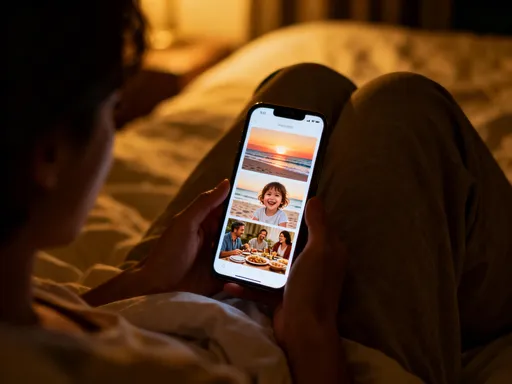
Tired of the Same Old Playlist Ruining Dinner Mood? Here’s How We Learned to Let Music Bring Us Together
Have you ever tried to set the perfect atmosphere at home, only to have the wrong song crash the moment? We’ve all been there—awkward silences, forced small talk, or energetic beats when everyone’s winding down. Music should connect us, not distract. That’s why we began exploring smart music systems, not for flashy tech, but for real moments: laughter over dinner, calm weekend mornings, kids dancing in the living room. This is the story of how learning to use music intelligently transformed not just our home’s sound—but how we feel in it.
The Moment We Realized Music Was Missing the Point
I remember the exact evening it hit me. It was a Thursday—dishes half-cleared, candles still flickering, and my youngest curled up on the couch with a book. My husband was flipping through the mail, and I thought, This is nice. Let’s keep this mood. So I tapped play on what I thought was a gentle acoustic playlist. Instead, a loud pop anthem blasted through the speakers. Everyone jumped. The spell was broken. My daughter looked up, startled. My husband winced. And I just stood there, embarrassed and frustrated. It wasn’t the song’s fault. It wasn’t even the speaker’s. It was me. I’d been treating music like background noise—something to fill silence, not shape it.
That moment made me pause. How often had we done this? Played upbeat tracks during quiet time? Repeated the same playlist for weeks, just because it was easy? I started paying attention. I noticed how certain songs made my son restless when he was trying to wind down. How my mom would tense up when a song with heavy bass came on during Sunday brunch. Music wasn’t just sound—it was emotional weather. And we’d been ignoring the forecast.
We didn’t need more songs. We needed better timing, better tone, better intention. We didn’t want a library—we wanted a mood tracker, a rhythm reader, a quiet companion that understood when to speak and when to stay silent. That’s when we realized: maybe technology could help us listen better—not just to music, but to each other.
Starting Small: Teaching the System to Know Us (Not Just Our Songs)
We didn’t go all-in right away. No smart lights, no whole-home setup, no complicated app with ten settings. We started with one speaker in the living room—something simple, something we could learn with. Think of it like adopting a new pet. At first, it doesn’t know your routines, your quirks, your unspoken rules. But over time, with gentle feedback, it starts to get you.
That’s how we treated our speaker. Instead of yelling at it when it played the wrong song, we paused it. Sometimes, I’d say out loud, “No, not this one,” and play something softer. Other times, I’d replay a song that had worked well—like that Norah Jones track that always made the kids calm down before bed. I noticed something surprising: the system started picking up on patterns. Play gentle jazz on Saturday mornings? It began suggesting similar tracks. Pause upbeat music during dinner? It stopped offering them around mealtime.
We weren’t programming it—we were training it. And the more we paid attention, the more it did too. It learned that rainy afternoons called for warm acoustic melodies, not dance beats. That 8 PM was story time, not workout hour. It wasn’t perfect, but it was trying. And that effort made us want to keep going. We realized technology doesn’t have to be flawless to be helpful. Sometimes, it just needs to be willing to learn.
From Solo Listening to Shared Sound: Music That Grows with the Family
At first, the music reflected my taste. Then my husband’s. Then the kids started adding their own songs—first one, then five, then a whole playlist called “Dance Party 3000.” I’ll admit, I braced for chaos. But something unexpected happened. Instead of clashing, the system started blending. It found connections we didn’t see. A reggae beat that matched the rhythm of my yoga playlist. A folk song my daughter loved that shared the same warmth as my dad’s old vinyl records.
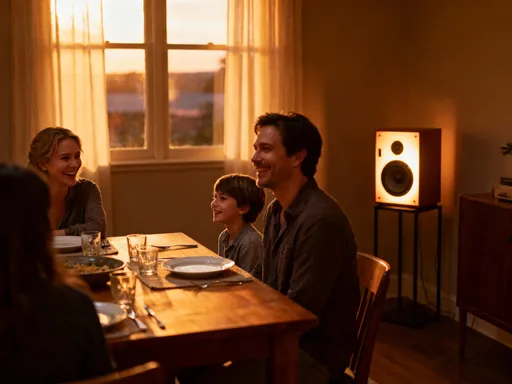
The real shift came when we stopped seeing music as personal and started seeing it as shared. We discovered features we hadn’t noticed before—like mood-based mixing, where the system combines songs from different profiles based on energy level, not genre. One evening, it played a soft indie track followed by a calming lo-fi beat, then a gentle piano cover of a pop song my son liked. No arguments. No remote control battles. Just flow. The kids didn’t complain. They danced. My husband looked up from his book and smiled. “This is nice,” he said. “Feels like us.”
That moment stayed with me. Music had become a language we all spoke, even if we used different words. The system wasn’t just playing songs—it was mediating, translating, harmonizing. It didn’t erase our differences. It made space for them. And in that space, we found something rare: a soundtrack that didn’t belong to one person, but to all of us.
Learning to Listen Differently: How Tech Sharpened Our Emotional Awareness
Here’s something I didn’t expect: using smart music didn’t just change what we heard—it changed how we listened. At first, we were focused on the tech. Did it pick the right song? Was the volume okay? But over time, our attention shifted. We started noticing things we’d overlooked before—the way a minor chord made the room feel heavier, how a steady beat could calm a restless child, how silence between songs could feel just as meaningful as the music itself.
We began naming emotions out loud. “This song feels hopeful,” my daughter said once, curled up during a rainy afternoon. “It sounds like sunshine trying to break through.” Another time, my husband paused a track and said, “This one feels anxious. Too fast. Like it can’t sit still.” We weren’t analyzing music theory. We were tuning into our feelings—and using music as a mirror.
That awareness started spilling into other parts of life. When my son was stressed before a test, I asked, “Do you want music that matches how you feel, or one that helps you shift?” He chose the latter—a slow, grounding instrumental track. Twenty minutes later, he was focused, calm. Music became a tool, not just a treat. It wasn’t fixing anything. It was helping us move through emotions with more grace, more intention. And that made all the difference.
Innovation in the Everyday: Building Creativity Through Small Experiments
I used to think innovation was for tech geniuses in labs or startups. But our journey taught me something different. Innovation isn’t about big leaps. It’s about small, curious steps. We started experimenting—tiny things, low risk, high fun. One weekend, we tried syncing soft lights with a morning playlist. The warm glow and gentle melodies made breakfast feel like a ritual, not a rush.
Another day, we created a “focus hour” for homework. No lyrics, just ambient sounds and soft piano. The kids grumbled at first—“This is boring!”—but within minutes, they were writing, reading, working without asking, “What’s next?” We didn’t force it. We just tried. And when it worked, we kept it. When it didn’t, we laughed and moved on.
These small experiments did more than improve our routines. They changed how we saw ourselves. We weren’t just users of technology—we were co-creators. We started asking, “What if we tried…?” more often. What if we made a playlist for rainy days? What if we let the kids curate dinner music once a week? What if we used music to mark transitions—like a five-minute wind-down before bedtime?
Each experiment taught us something. About timing. About tone. About what we truly needed. But more than that, it taught us that we could learn, adapt, and grow—together. Innovation wasn’t something we waited for. It was something we built, one small idea at a time.
When It Didn’t Work—And Why That Was Okay
Let’s be real—not every moment was magic. There was the time the system played a melancholy ballad during my daughter’s birthday party. The room went quiet. She looked confused. I quickly grabbed my phone and switched to something cheerful, but the mood had shifted. Another evening, it went silent when we needed energy—just as we were trying to clean up after dinner and get the kids moving. And once, it started playing lullabies at 3 PM because someone had whispered “quiet” nearby.
Those moments were frustrating. But they weren’t failures. They were feedback. We learned to recalibrate—to give the system gentle corrections, like “Not this one” or “Play something brighter.” We adjusted settings. We talked more openly about what we needed. And slowly, the missteps became less frequent.
More importantly, we changed our expectations. We stopped demanding perfection. We started valuing progress. We realized that even the smartest technology needs patience, just like a child learning to read or a friend learning your habits. It’s going to misread cues. It’s going to need second chances. And that’s okay. What matters is that we keep showing up, keep teaching, keep listening. Because growth isn’t about avoiding mistakes—it’s about learning how to move through them.
The Sound of a Smarter, Softer Home: What We Gained Beyond Music
The real reward wasn’t perfect playlists. It wasn’t even the convenience. It was connection. It was the way my husband and I started sharing songs that reminded us of our early days. It was the way my daughter began asking, “Can we listen to something that feels brave?” before her piano recital. It was the way the house felt lighter, more alive, more *us*.
We didn’t just install a speaker. We changed how we live. Mornings are calmer. Evenings are deeper. Transitions are smoother. Music became a quiet guide—helping us slow down, tune in, and show up for each other. We didn’t replace conversation with sound. We made space for it.
And here’s the truth I’ve come to believe: technology doesn’t have to be loud to be powerful. It doesn’t have to replace human connection to enhance it. Sometimes, the most meaningful tech is the kind that helps us be more present, more aware, more tender with ourselves and each other. It’s not about having the latest gadget. It’s about using what we have—with care, with curiosity, with heart.
So if you’re sitting there, wondering whether smart music is worth it, I’ll say this: don’t think about the tech. Think about the feeling you want at home. Peace? Joy? Togetherness? Let that guide you. Start small. Be patient. Let the system learn you, and let yourself learn it. Because when music stops being background and starts being part of the story, your home doesn’t just sound better. It feels more like home.