How I Built a Smarter Investment Portfolio Using Real Financial Tools
Building an investment portfolio felt overwhelming at first—where to start, what tools actually work, and how to avoid costly mistakes. I’ve been there, testing everything from budgeting apps to risk analyzers. Some flopped, but others transformed my approach. This is my real journey, not textbook theory. You’ll see how practical financial tools can simplify decisions, protect your money, and grow wealth—without promises of overnight wins. Let’s walk through what truly works.
The Moment I Knew My Portfolio Was Broken
It started with a single email notification: my brokerage account had dropped 18% in one month. At first, I told myself it was just a market correction. But as I scrolled through the holdings, a deeper unease settled in. Nearly half of my money was in two tech stocks I’d bought because they were trending online. Another 30% sat in a single mutual fund focused on domestic equities. I had no exposure to bonds, real estate, or international markets. There was no plan—only a series of impulsive choices based on headlines and hunches.
The emotional toll was real. Every market dip felt personal, like a reflection of poor judgment. I found myself checking my phone obsessively, reacting to minor fluctuations with anxiety. When the market dipped again a few months later, I sold everything in one panic-driven afternoon. I told myself I was being cautious, but really, I was exhausted. That decision cost me. Within a year, the market rebounded, and my cash sat idle, losing ground to inflation. I realized then that I wasn’t managing risk—I was avoiding it, and that’s not the same thing.
What I lacked wasn’t knowledge or access—it was structure. I had no way to measure diversification, assess risk tolerance, or track performance objectively. My portfolio wasn’t built on strategy; it was built on emotion. That moment became a turning point. I decided to stop guessing and start using tools that could bring clarity, discipline, and consistency to my investing. Not tools that promised miracles, but ones grounded in data, transparency, and repeatable processes. The journey wasn’t flashy, but it was effective—and it began with understanding what tools could realistically do.
What Financial Tools Really Do (And What They Don’t Fix)
It’s easy to overestimate what financial tools can accomplish. Some advertisements suggest that a single app can predict market movements or guarantee returns. The truth is far more modest—and far more valuable. Real financial tools don’t eliminate risk or generate profits on their own. Instead, they act as filters, helping investors separate signal from noise, reduce emotional interference, and make decisions based on facts rather than fear or excitement. Their power lies not in prediction, but in perspective.
Take analytics platforms, for example. These tools gather data from multiple accounts, calculate performance, and show asset allocation across categories like stocks, bonds, and cash. They don’t tell you which stock will double next year, but they can show if 70% of your portfolio is in high-volatility growth stocks while you claim to be a conservative investor. That kind of mismatch is common—and dangerous. Without tools, it’s easy to believe you’re diversified when you’re not. A platform that visualizes your holdings makes imbalances impossible to ignore.
Similarly, risk assessment models don’t forecast crashes, but they simulate how your portfolio might behave under different market conditions. By analyzing historical data, they estimate potential drawdowns—how much you could lose in a downturn similar to 2008 or 2020. This isn’t about scaring investors; it’s about preparing them. When you see that a 30% market drop could reduce your portfolio by 22%, and that exceeds your comfort level, you have a chance to adjust before disaster strikes.
What tools cannot fix is human behavior. No dashboard can stop you from selling during a panic if you’re not emotionally prepared. No algorithm can replace the discipline of sticking to a long-term plan. But tools can create guardrails. They provide feedback, trigger alerts, and offer benchmarks—small nudges that keep you aligned with your goals. The key is to use them as supports, not substitutes, for sound financial judgment.
The Foundation: Tools That Track and Organize
Before I could improve my portfolio, I needed to see it clearly. Like many investors, I had accounts scattered across different institutions—retirement funds at work, a brokerage account opened years ago, a few savings vehicles with modest balances. Tracking them manually was time-consuming and error-prone. I’d update a spreadsheet every few months, but by then, the data was outdated. Gaps in information led to blind spots in decision-making.
The first real change came when I adopted a portfolio management platform that linked all my accounts in one place. These tools, often called personal financial management (PFM) systems, use secure connections to pull in real-time data from banks, brokerages, and retirement plans. Within minutes, I could see my total net worth, asset allocation, and performance history—all updated daily. No more spreadsheets, no more guesswork.
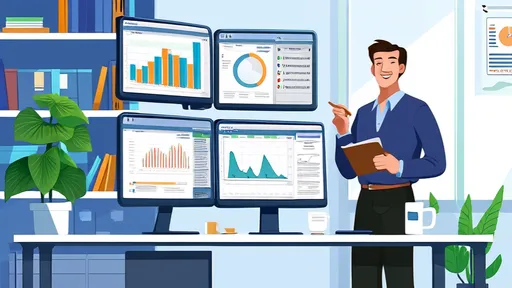
One of the most immediate benefits was visibility into asset classes. The platform broke down my holdings into categories: large-cap stocks, international equities, bonds, cash equivalents, and alternatives. A color-coded pie chart showed that I was heavily concentrated in equities, with almost no fixed income. That visual alone prompted a conversation with myself: Was this alignment with my goals? I was 15 years from retirement and wanted stability, yet my portfolio behaved like that of someone decades younger.
Automated tracking also eliminated emotional distortions. When markets moved, I wasn’t reacting to headlines or rumors—I was looking at actual numbers. I could see how each asset contributed to overall performance, which holdings were dragging returns, and whether recent changes made sense. Over time, this consistency fostered discipline. Instead of making impulsive trades, I began to ask, “Does this decision move me closer to my target allocation?” The tool didn’t make the choice for me, but it gave me the information to make it wisely.
Risk Control: Tools That Keep Emotions in Check
One of the hardest lessons in investing is that risk isn’t just about numbers—it’s about behavior. Even with a well-diversified portfolio, an investor can undo years of progress in a moment of panic. That’s why I turned to risk profiling and volatility monitoring tools, not just to measure market risk, but to understand my own tolerance for it.
Risk profiling tools start with a questionnaire: How would you react if your portfolio dropped 20%? What’s your time horizon? What role does this money play in your life? Based on the answers, the tool assigns a risk score and suggests an appropriate asset mix. When I took the assessment, I rated myself as moderate, but the tool showed my actual portfolio matched an aggressive profile. That gap explained why I felt so stressed during downturns—I was taking on more risk than I could emotionally handle.
Volatility monitors added another layer of protection. These tools track how much a portfolio fluctuates over time and compare it to benchmarks. They also run stress tests, simulating how the portfolio would have performed during past crises. One analysis showed that if the 2008 crash happened today, my current mix could lose 35%. That number shocked me. I wasn’t prepared for that level of loss, even if recovery was likely over time.
To stay grounded, I set up automated alerts for extreme movements. If my portfolio dropped more than 10% in a month, I’d get a notification—not urging me to sell, but reminding me to review my strategy. During a sharp market correction last year, that alert went off. Instead of logging in and selling, I pulled up the stress test results. The data showed that while painful, the drop was within expected ranges for my allocation. I held steady. Six months later, the market recovered, and my discipline paid off. The tool didn’t prevent the drop, but it prevented a costly reaction.
Optimizing Returns Without Chasing Hype
In a world of viral stock tips and “next big thing” headlines, staying focused on long-term growth is harder than ever. I used to scan financial news daily, chasing ideas that sounded exciting. I bought into a renewable energy ETF because it was surging, only to watch it stall for months. I jumped into a dividend stock promoted by an influencer, not realizing its payout was unsustainable. Each time, I confused activity with progress.
What changed was using data-driven tools to evaluate performance objectively. Benchmarking tools allow investors to compare their portfolio’s returns against relevant indices—like the S&P 500 for U.S. stocks or the Bloomberg Aggregate Bond Index for fixed income. When I ran the comparison, I saw that my portfolio had underperformed the market for two years, despite all the trading. The cost of fees, poor timing, and undiversified bets was clear.
Performance attribution reports took it further. These tools break down returns by asset class, sector, and individual holding, showing exactly where gains or losses came from. One report revealed that a single tech stock had driven most of my returns, while the rest of my portfolio was flat. That concentration was risky. Another analysis showed that my international holdings had underperformed due to currency shifts, not company performance. Armed with this, I made informed decisions: I reduced exposure to the overconcentrated stock and rebalanced into broader index funds.
The goal wasn’t to beat the market every year, but to stay on track with steady, compounding growth. I stopped chasing trends and started focusing on alignment. Sector analysis tools helped me see if I was overexposed to areas like technology or consumer discretionary. If one sector grew beyond its target weight, I rebalanced—selling high and buying low, not based on emotion, but on data. Over time, this disciplined approach led to more consistent results, even in volatile markets.
Hidden Helpers: Tax and Cost Analyzers
One of the quietest wealth destroyers in investing isn’t market risk—it’s cost. Fees, taxes, and hidden expenses chip away at returns year after year, often going unnoticed. I once assumed that as long as my portfolio was growing, the details didn’t matter. Then I used a cost analyzer tool and discovered that I was paying over 1% in annual fees across my funds. That might sound small, but over 20 years, it could erase tens of thousands in potential gains.
Expense ratio comparisons became a regular part of my review process. These tools show the annual cost of owning a mutual fund or ETF as a percentage of assets. I found that many of my actively managed funds had ratios above 1%, while low-cost index funds offered similar exposure for 0.03% to 0.10%. Switching to lower-cost options didn’t guarantee higher returns, but it improved my odds by keeping more of my money working for me.
Tax efficiency was another blind spot. Capital gains taxes can significantly reduce net returns, especially in taxable accounts. Tax analyzers estimate the tax impact of selling holdings, showing how much you might owe based on cost basis and holding period. One tool highlighted that selling a particular stock would trigger a large short-term gain, pushing me into a higher tax bracket. Instead of selling impulsively, I waited until it qualified for long-term treatment, saving thousands.
Some platforms also offer tax-loss harvesting suggestions—automatically identifying losing positions that can be sold to offset gains. While I don’t rely on automation alone, these alerts help me make more tax-smart decisions. The cumulative effect of reducing fees and optimizing taxes isn’t dramatic in any single year, but over a decade, it can mean the difference between retiring comfortably or falling short.
Building Your Own System: From Tools to Strategy
After years of trial and error, I’ve learned that success in investing isn’t about finding the perfect tool—it’s about building a system that works for you. No single app can manage your entire financial life, but a combination of reliable tools, used consistently, can transform how you make decisions. The goal isn’t complexity, but clarity. It’s about creating a process that reduces emotion, increases accountability, and aligns with your long-term goals.
My current workflow starts with a portfolio tracker that consolidates all accounts. Every quarter, I review the asset allocation dashboard to check for drift. If any category moves more than 5% above or below its target—say, U.S. stocks grow from 50% to 56%—I rebalance. This rule-based approach removes guesswork and prevents overexposure to rising markets. I pair this with a risk profiler that I revisit annually, especially after major life changes like a job shift or family milestone.
Before any trade, I consult a benchmarking tool to see how my portfolio has performed relative to the market. If I’m considering a new investment, I run a sector analysis to avoid overlap. For taxable accounts, I use a tax estimator to understand the consequences of selling. None of these steps take more than a few minutes, but together, they create a disciplined rhythm.
The biggest shift has been moving from reactive to proactive investing. I no longer wait for market swings to prompt action. Instead, I follow a schedule: quarterly reviews, annual rebalancing, ongoing cost monitoring. This consistency has reduced stress and improved outcomes. I’m not chasing returns—I’m building resilience.
Investing is a lifelong journey, not a destination. Goals change, markets evolve, and new tools emerge. What matters is staying committed to a process grounded in data, transparency, and patience. You don’t need to be a financial expert to build wealth. You just need the right tools, used the right way, with a clear purpose in mind. My portfolio isn’t perfect, but it’s smarter—and so am I.